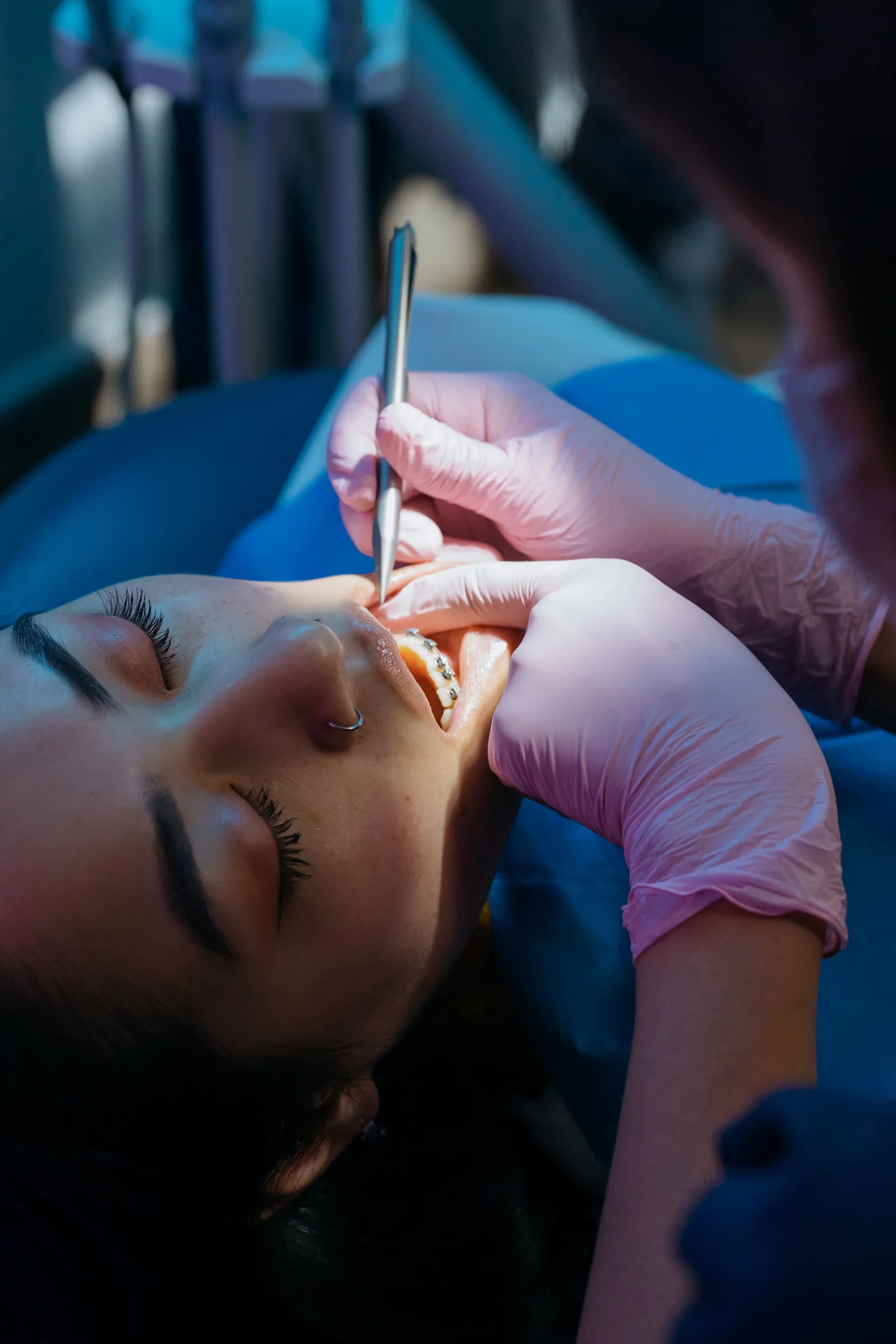
Orthodontics moves teeth, little by little, until they fit better together and with the bite.
Moving teeth, at any age
Teeth move throughout life, not only in childhood. The bone around them responds to steady, gentle pressure, and over time each tooth shifts toward the place it's being guided to. It's a slow process, almost imperceptible from one day to the next, but constant.
That's why orthodontics in adults is more and more common, not just in teenagers: what changes with age isn't whether it's possible, but what makes the most sense for each mouth at each point in its life.
How we begin
Before we talk about a treatment, we sit down to listen. Here, we don't hand you a quote: we build Care Plans, which come from understanding your mouth, your questions and what you hope to achieve, not just a price list. Because caring begins before treating.
That means calmly explaining what options exist and what each one involves, and giving you the time you need to decide. It is your smile, and the decision is yours, backed by the information you need to make it with confidence.
Day to day with orthodontics
Wearing orthodontics changes a few small habits: how you brush, what you eat carefully, what you pay attention to. It's more noticeable at the start; over time it becomes part of the routine, something you simply live with.
Throughout the whole process we stay close by, checking how your mouth is evolving and helping with whatever comes up. If a question comes up at any point, we talk: that is what we are here for.